Showing posts with label Hñahñu. Show all posts

Wednesday, May 31, 2023

Final Farewell


This will be my last post, as we leave tomorrow. At first, it seemed we had all the time in the world here, and then it flew by so fast it took my breath away. My heart is heavy with the goodbyes, but full with the thought of seeing home and loved ones. We went through a transition as of late, and I think I can speak for both me and Jon in this. As we started to adjust to the fact, sometime in April, that we had less than two months left, we began to accept the inevitable. This entailed starting to pack. Yes, even as early as April. After we got back from Oaxaca, we took one big suitcase down from the shelf and slowly began adding things we wouldn't need here anymore, like winter clothes, and some of the items we'd been collecting to bring home for ourselves and for gifts. That sort of made it official. 

Then we relaxed into some of the activities we had planned for the spring. School started back up after Holy Week - sort of - meaning I didn't do much teaching in April since teachers were giving evaluations during the second week, and in the third and fourth any students who didn't have exams or work to complete had the time off. The teachers not so much, but there wasn't a lot for me to do. I attended a meeting or two, offered time for folks to come chat with me in English in the office, and tried to keep my writing workshop going. I'm afraid to say that was a bust. Carolina, the person who ran the workshop with me, got super busy, and, since most of the participants were her students, they were occupied with all the tasks she had for them. And so I finally decided that those who wanted credit for the workshop needed to submit their projects to me, and I would evaluate them one on one. Here is a link to the blog I created to showcase those works. Click on the links of writers' names on the right to see all the projects. I did my best to translate most into English, hopefully without losing the essence. There are not as many as I'd hoped, but those I received gave me a clear view into the female, Mexican, literary voice in this region. That voice is very connected to home, family, and friends. Even Carolina, a Ph.D. in Chemistry and one of the most brilliant people I know, for her contribution, wrote a small book of recipes, translated into English by me, and which will eventually include the hñahñu translation as well. In other words, it's a work in progress. 

Some of our dearest friends here - a
beautiful and loving family. 
In general, the submissions were quite moving. One young woman wrote about losing a baby, another wrote a memoir devoted to her small child, another a funny sort of gossip column about her and her friends, and yet another wrote the beautiful tribute to her deceased mother that I've spoken of before. Another began keeping a diary, but her entries were too personal to share. I've included the note she wrote, in which she talks about what it meant to her to have the opportunity to express herself like she never has before. To me, these projects indicate that home and community are of greatest interest to the women here, and I honor that. This differs substantially from what well-established Mexican female writers are publishing right now - much of which is focused on the border and other difficult issues taking place in Mexico. I appreciate that the women I've been able to connect with in this region are not looking so far afield. They are concerned with the love and safety of those around them. 

Before I share some of those other spring activities I mentioned, I want to talk a bit about Mexico and the realities of life here. I tend to enthuse about all that is wonderful, but it's important to remember the hard things as well. I have mentioned some of these topics before, but to go into more detail... 

Many children work - and I mean little children. I don't know if there are laws against it here, but if there are, they are not enforced. For instance, there are two small boys who strum guitars - without actually knowing how to play them - at the traffic light that connects the road to the university with a highway. It's a big, dangerous intersection, and they're out there all day, trying to collect a peso or two from the cars that stop at the light. I think their mother or older sister keeps an eye on them by selling candy. Other children work in the daily marketplace or the Sunday street market with their parents, learning how to loudly hawk their wares. Some of them, teenagers, are my students. They're making a living; that's ok. But the really young ones...are they in school? Definitely not the boys playing guitar at the traffic light. 

And the dogs. So many dogs. They wander the street all day, laying down anywhere they please in the heat, completely collapsed. Some clearly belong to someone somewhere, others are strays, especially the ones at the university. It's so sad to see a skinny mama dog, teats full, trying to find a meal. I wish they were at least spayed and neutered but most are not. You really gotta learn to harden yourself against it or you'd be feeding dogs all day and night, and making plenty of canine friends. They are very cute and sweet - not a one is aggressive - and I wish I could take them all home. 

Many of the taxi drivers, with grand biblical names like Melquiades, Ismael, and Jesús, speak of their experiences of having worked in the States: of pesticide poisoning from working in the fields, long separations from families, and the humiliation of being deported. Still, many would risk it again because the money is so much more than they can make in Mexico, driving a taxi or doing anything else. 

The poverty: it's easy to turn a blind eye to it, but many homes here are hovels or shacks. There are a lot of places sort of half-finished - even the nicer ones. So, while there are some magnificent homes and haciendas here and there, there are often little tumbled-down houses right next to them. Many people eke out a living however they can - often with more than one endeavor. The lucky ones have a stall in the market - I don't know how they acquired them - maybe they are passed on one generation to the next like the houses. The really lucky ones have an actual storefront, though they close at all kinds of odd hours. One thing is for certain, most people work their butts off day and night, and yet they find the time for plenty of celebration, and are filled with a love of life that is contagious. 

Hazards: holes in the sidewalks - some actual pits - and endless cut-outs for driveways that can be as much as a two-foot drop, overhead awnings that hang low, electrical boxes that jut out from walls at about head height, piles of gravel in the streets, unprotected construction sites: things that in the U.S. would be lawsuits waiting to happen. Here, you better just be careful because no one is going to pay for injuries incurred.

Cooking With Squash Flowers

Food: It's pretty cheap, at least from our perspective. You can get a couple dozen delicious, freshly-made corn tortillas for about 50 cents. There are tons of tortillerías, where the work is hot and hard, the tortilleras on their feet all day, but it's probably fairly lucrative as people buy them continuously. I thought the tortillas were a good, inexpensive source of nutrition for poor families until Carolina pointed out that if you have a family of six, you need at least sixty tortillas a day, which comes out to a little less than three bucks. That doesn't sound like much, but if you only make ten bucks a day, that's a lot of your budget going to food, and it's definitely not all the food you'll need. That's one reason people here rely on what grows naturally like nopal cactuses (prickly pear), squash blossoms, the malva plant, and the flowers of the maguey (agave), also home to small worms called chinicuiles that are much sought-after. Folks also eat crickets, grasshoppers, and ant eggs, which are delicious. I've tried the grasshoppers, but not the worms - I just can't. This is only a fraction of the local produce that comes directly from the uncultivated soil, and people in this region have been living off it for millennia. 

Our house: to have hot water we must turn on the boiler and light the pilot every morning. We turn it off after we shower so as to not waste gas. As a result, we do not have hot water all day on demand. And to have water at all, we need to turn on the pump a couple of times a day, but even that doesn't always do it. In general, the plumbing is iffy. Many of the lightbulb sockets don't work. The floor tiles are stained and a little uneven. The kitchen sink just sits on a metal stand. It's freezing downstairs in the winter, and hot upstairs in the summer. There is no water pressure. The occasional scorpion wanders in. 

Health: we both feel much healthier here than in the States. We often walk at least 5 miles a day and are feeling really fit. That said, we've both been violently sick to our stomachs more than once - obviously something we ate that wasn't well washed or that contained something we couldn't tolerate. Also, we had COVID in October for the first, and hopefully last, time. People here seem to age more quickly than in the States, and those our age seem older than us. Many people don't get vaccinated and diseases like Polio are still a thing.

The Beautiful Valle del Mezquital
This region: I believe I've mentioned it is called El Valle del Mezquital, or The Mezquital Valley, which covers about 2,700 square miles, and encompasses many small and larger towns. Though it is a fairly poor region, there are people who have thrived and gotten rich here, as people do everywhere, and in some areas, like Tepa, as I've mentioned, it's a fairly educated population. It is beautiful - not beautiful like the rolling hills of Tuscany, or the fields of France - not like the soaring Alps or Rockies, or the wonders of Asia, or the prairies with their amber waves of grain. It's partially high desert, partially irrigated fields of corn and other crops, emerald green under the intense sky. There are dramatic rock formations and lots of natural hot springs. It's out of the way and not well known by tourists, but it's a place I have come to cherish. It's rough and it's scrappy but stuffed full of history and the indigenous Otomí cultures that encompass many sub-cultures, especially that of the hñahñu. Everyone here knows a few words of the language, especially the greeting of Good Morning: Axajua! 

The green part is the state of Hidalgo and the
brown indicates where in Hidalgo the 
Valle del Mezquital is located.

And now for the fun stuff we've done in the past month or so:

We went to another magical town, called Mineral del Chico, in the mountains above Pachuca. Now, we've been to all three magical towns in Hidalgo. The pictures speak for themselves.


Mineral del Chico
Cecilia came to visit again, to do one of her sensational, motivational talks for the staff and friends of the fancy restaurant here, commissioned by the owner. We can't get enough of spending time with her though we only had her for 24 hours. 

Jon at Tlaco
Tlaco
For our anniversary we went to a place called Tlaco, where you can enjoy hot, naturally occurring mineral pools, another gem of the Valle del Mezquital. It's on the road to Ixmiquilpan, the last big town before Las Grutas de Tolontango, which I wrote about previously. That whole area is full of these hot springs, some more beautiful than others though Tolantongo and Tlaco are among the best. It was about a month ago that we traveled to Ixmiquilpan just to go to the tianguis - street market - because we were looking for a tablecloth and were told they had the best artisanal products there.  They don't, and we didn't find one. However, the trip back, via Actopan, was simply spectacular and now I'm glad we took the long journey with no resulting tablecloth because we got to see more of the glory of the valley.


Speaking of Actopan, on the American Mother's Day (because Mexico's is the 10th), we went to find some boots for me, as we knew of a shop there. I decided against the boots, but we ate at our favorite place in that town, El Itacate, a restaurant that features local and indigenous specialties like the foods I mentioned above. Jon even had a cocktail made of cactus fruit and mezcal, and we shared a gordita with escamol, or ant eggs. Everything was so, so, good. 

There was a huge parade in San Agustín on May 16th, wherein all the teachers and students from every institution in town, including the retired professors, marched to celebrate Teacher's Day, which was the day before. San Agustín's unofficial slogan is "San Agustín, the Cradle of Education," which is completely apt. I took part in the parade, very impressed and inspired by the respect this place shows for educators. There were also dinners for the teachers two days in a row, and, at the one I attended, we were treated to wonderful Mariachis. When there are Mariachis at a party, you know it's a real party. 
Lining Up for the Parade
On the 19th we went to a Charreada, basically a rodeo, in a huge horse arena here in Tepa. We thought there would be more pageantry, but it was really just a skills competition for local horsemen and women. Not that fascinating to us, but a valuable cultural experience. 


On the 20th, we threw a party for our friends here, to thank them for their friendship, generosity, and love. Our neighbors, also our good friends, helped us organize it, and a great time was had by all. 

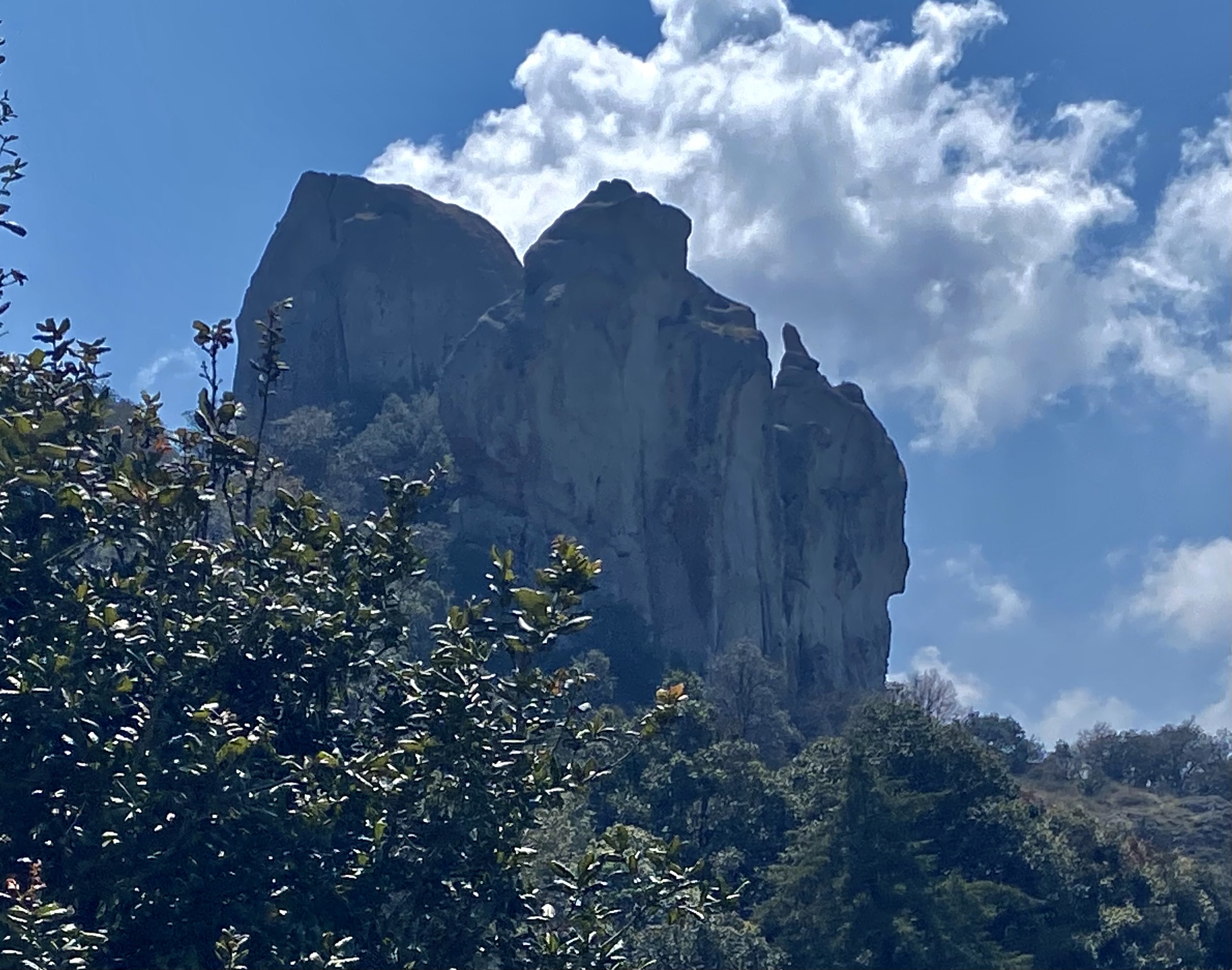
On the 25th, taxi driver Jesús drove us into the mountains above Actopan to see the rock formations known as Los Frailes (the friars) up close. It was a gorgeous drive into forested peaks, topped by those amazing crags. Briefly, here's the sexy legend of Los Frailes, and another cluster of rock formations several miles off called Las Monjas (the nuns): A group of friars was traveling from the convent in Actopan to Mineral del Chico. A group of nuns was traveling from Mineral del Chico to Actopan. When the two groups met in the mountains, they indulged in some illicit activity. As a result, God turned them to stone, and charged them to watch over the Valle del Mezquital for all eternity. Uy.
At El Itacate - the hñahñu word for food

Getting back to our day: Jesús was so kind and attentive, explaining more interesting facts about the area, and finally delivering us to a gem of a lake, nestled into a small valley, just past the tiny town of San Jerónimo. We took a brief hike around the lake, enjoying the fresh mountain air. He then took us by his house where he gave Jon some crystals he had collected over the years, as they are both avid rock collectors. Sure, we paid him for his time and the ride, but there is no repaying such kindness. We vowed to keep in touch via Whatsapp - another friend from Hidalgo. Jon and I ended the morning with a delicious lunch at El Itacate. 

Our last Friday in town we had dinner with a couple we met at the Sunday tianguis several months ago, selling their wares of used clothing and tools. The evening they came over we feasted together on chicken with green mole, and lasagna - a combination that strangely worked. The two of them live a humble life but are so full of spirit and humor. When we'd come upon their little stall, we'd sometimes buy a few things and she and I would chat and laugh. She was so generous, always wanting to give things away to us. They are both treasures of the Otomí bloodline, lovely people who have become good friends.

The Daily Marketplace
Over the same weekend, San Agustín came alive with a fair, complete with rides, and booths selling candy, pan dulce, jewelry, toys and more. On Sunday, the tianguis expanded around the fair, which had taken over the center of town. People come from the surrounding area for the tianguis every week, but the fair brought more folks streaming in. The celebration culminated in the anniversary of the daily marketplace, which is today, May 31st, complete with Mariachis, of course. The building has recently been renovated and beautified, and it's one of my favorite places, where we've gotten to know many of the vendors. 

Universidad Politécnica Francisco I. Madero
Monday, a woman who participated in my writing workshop virtually, Daiset, came on a last-minute visit with her partner Rina from Mexico City. It was a joy to meet them both in person, in particular Daiset because she and I had clicked from our first zoom call, and, in the interim, she has written some amazing stuff. Check out that blog link above to see only a small sample of her brilliance. 

Tuesday the school threw a farewell party for me - an entire catered breakfast complete with enchiladas, fruit, coffee and cake. Almost all the teachers I've worked with were there, as well as some of the administrators I've become close to. I will miss these people immensely. They are funny, smart, and extremely dedicated. I know we'll stay connected, though I almost broke down and sobbed after I said my final goodbyes and walked through the campus one last time. I've become very attached to the place. 

Last night we had a dinner of tacos dorados in the marketplace with our dear friend, Arlo, and another friend who is mentoring him as he begins the process of applying for a Ph.D. What a great night of conversation and wandering through the fair in Tepa.

Today, as I post this last entry, the final thoughts I'd like to share are of the ancient and deep mystery I feel throughout Hidalgo, and particularly in the Valle del Mezquital. You can sense it in many places in Mexico, but you have to be still, to soak it in. In fact, I had to be truly immersed in this region for these entire nine months to even begin to understand it. Beneath the charming or scrappy towns, bustling cities, and semi-arid land, I hear the ancestors speaking. They tell me this place is fragile and precious; it contains the heartbeat of venerable cultures that inform the way the population lives today; it needs to be preserved and honored; it possesses an enduring and majestic history that has produced a great and noble people. The culture has gotten under my skin, and the people have touched my heart beyond compare. I will be back - we will back. Until then, I will carry this place and its people in my heart. Adios San Agustín, adios Valle del Mezquital, adios Hidalgo, adios Mexico. Te adoro. 
Los Frailes


Thursday, April 27, 2023

Love Letter to San Agustín

The daily marketplace - photo credit: El Morro de las fotos
Dear San Agustín,

How can I find the words to thank you for all you've been to me, to us, these past eight months? When I first found out I was going to be placed in San Agustín, Hidalgo, I was a little confounded. I immediately looked you up on the map to find that you barely existed there. I discovered a few photos, and you looked...cute, but very small, and very rural. So I visited you on Google Earth, and with Jon, roamed along your streets to see...yes, a very small and quiet town - clean though, and rather colorful - with a sweet little plaza in the middle and a very pretty church. 
Tianguis day

Nothing could have prepared us for the reality of how lovely you were. That first week we were staying at a small house on the university campus so we had to come to you to get supplies by walking that mile and a half, or taking the Combi. The first day we visited, we were pleased to find that you offered plenty of shops and one or two small grocery stores where we could get what we needed. The second time we came, we were met with an explosion of activity and color in the form of your Sunday street market - or tianguis. This was probably the first moment we fell in love with you. Everything was so fascinating, so alive - the people so friendly. 
The walk to school
Then, after we spent a couple of weeks in the misery that was nearby Mixquiahuala, we definitely realized how special you were and how important it was going to be to find a house within your environs and not in one of the other towns 20 or so minutes away that were, honestly, not so special. We were lucky to find our little house right near your town center, though it needed a lot of TLC, furniture, dishes and such, and our own artwork - all of it a labor of love. And all the while, we were exploring what you had to offer, feeling more and more grateful to know you. 

We were also surprised to learn, both through experience and word of mouth, that you are a progressive place, an open-minded community that is accepting of all. We wondered why such would be the case in this out-of-the-way rural town until we were told that you are a community of teachers. It makes sense with the nearby university, but, I mean, generations of teachers  - because the university was once a college that taught teachers. This is why your people have a fairly high education level in general, and why one finds so many deep thinkers here. This fact was made all the more clear to me one day when I witnessed a solemn parade of hundreds of middle-aged to older people, walking through the streets all dressed in white shirts and navy slacks or skirts. People on the sidewalk stood in deference as they passed. I asked who they were and someone told me they were retired teachers. To see so many teachers, respectful and respected, honored in that way, drove it all home: this place is different. 
The original university building.
The flag represents its name: El Mexe, which
means spider in hñahñu.

As I walk around your streets now, I'm just trying to soak you in so that I never forget anything. 
Every smell: ripe mangos, tortillas on the grill, freshly baked pastries, corn stalks burning, dust, lavender, clean meat markets, chicken roasting, tacos and gorditas and chicharrones.
Every sound: music coming from everywhere, dogs barking, vendors hawking, birds chirping, cars and machinery, construction, chatter, and thunder.
Every sight: the humble buildings, the tents of the tianguis, the colorful fruits and vegetables, the shining clean, new indoor marketplace, smiles, old faces, young faces, the modern and traditional builings of the university, trees (mesquite, palm, pine, cypress, jacaranda), fields, corn, sunflowers, alfalfa, lavender, cactus, hills, and sky.
Sprouting corn in the field
Every taste:
Candies made with the natural sugar piloncillo; all the fruits, roasted plantains, fresh gorditas, tacos al Pastor, chilaquiles, enchiladas with salsa verde, freshly squeezed orange juice, the excellent steak or caesar salad from the only fancy restaurant in town, and the very best food in the world: a fresh, hot corn tortilla right off the grill. 
Every person that I've come to love: each dear friend, the families who've treated us like their own, the little man with the wide smile who sells nopales, the lovely Beni who sells meat, sweet Rosalba who sells nuts, Imelda the chatty salon lady, the kind women who make and sell tortillas, Doña Aurelia who cleans our house with such care, the people at the pharmacy and in the shops, Lorena with her little health food store, the Combi drivers, the lady who sells eggs, the gentleman and his family who sell sweets, the señor cleaning the town square who greets us every morning, the orange juice guy who taught us our first word of hñahñu, the teachers and students, and so many more. 
Wall of flowers

I will miss you beyond words, but it doesn't have to be forever. We'd like to have a place to come back to if it's possible to arrange that, and in which to welcome friends who want to visit as well. At the very least, you offer a nice, clean little hotel. The point is, you are such a wonderful place from which to strike out and see some of the marvels Hidalgo has to offer: the archeological site of Tula, the town of Actópan with its beautiful monastery, the Grutas of Tolantongo, the nearby mural town of Morelos, three of your state's Magical Pueblos, and much more. I hope that people also come just to see and experience you. But I hope they don't come with the attitudes of the typical tourist, or disrespect you in any way. You are not a resort town, where people order around the help (though they shouldn't) or expect the locals to conform to their foreign ways (which is obnoxious). You deserve the ultimate deference and respect. You are fragile. You must be preserved so that the people of your community don't have to adapt to the outside world. It's our job to adapt to you. 

Beautiful, sweet, vibrant San Agustín - please never change. You are all you need to be. 

I love you with all my heart. 
Painting of Frida and Diego on a tree. 


Monday, March 13, 2023

Travel Fever Part 1

Pachuca, Hidalgo
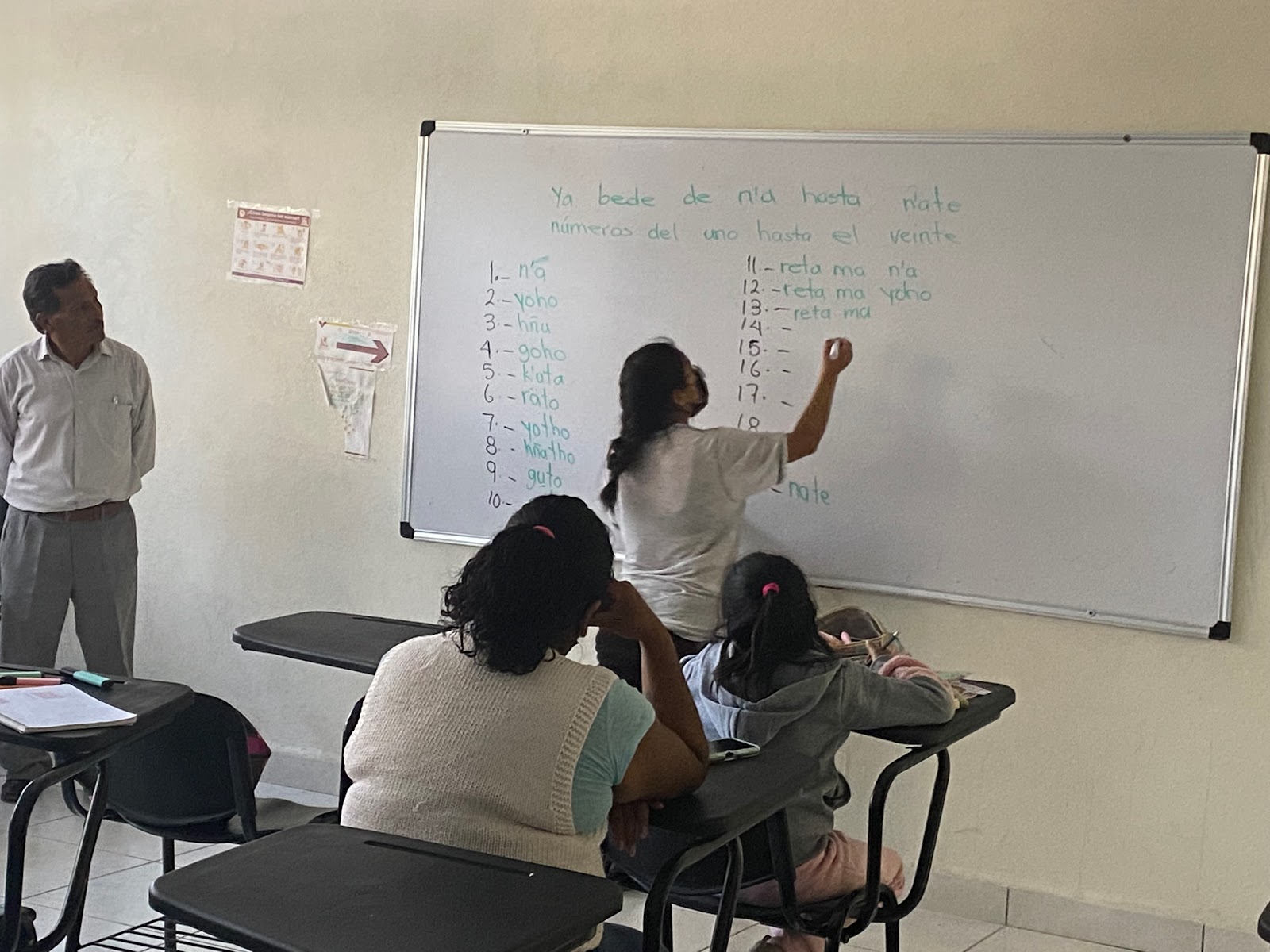
Just a few days after I posted my last entry, one of our dear friends, Teresa, who lives in New York, came all the way to this far-flung place to visit and experience a little of what life is like for me and Jon here. She flew into Mexico City on a Saturday and explored much of what that metropolis has to offer. She then came to Tepatepec by bus on Wednesday. Jon met her at the bus stop and gave her a little tour, and then they came to the University to meet me and join in our Hñahñu language class (the indigenous language of this region). After that, we met my friend Arlo at the best taco place in San Agustín. 

Let me just say, Teresa got it right away, and when I say IT, I mean the enchantment of this place. It's crazy how this little, slightly scruffy town gets under your skin so fast. You feel it - and she felt it - the kindness of people, their devotion to the community, and the charm of a slower, yet still vibrant, pace. It drew her right in: the food, the smells, the sounds, the air, very quality of the light. There's no denying the special-ness of it. She even loved our slightly funky house, to which we've added our own touches of art and comfort. 
Tacos with Teresa

The next day, Thursday, we wasted no time but got right to adventuring. We set off at about 9:00 a.m. on the local Combi to the next town over, where we grabbed a bus to the larger town, about an hour away, of Ixmiquilpan. (I dare you to pronounce that!) Our final destination was the Grutas (grottos) de Tolantongo, an hour farther. We were not very confident of how to go and which buses to take, but a lady who just happened to start out with us in Tepa guided us all the way to Ixmiquilpan, and there, negotiated a taxi to take us to the Grutas. She was an angel sent from heaven if there ever was one. 


Desert Vista on the Road to Tolantongo
That drive from Ixmiquilpan to Tolantongo was intense. The road steadily ascends until it finally begins to descend into a deep valley, surrounded by desert-clad hills that jut up into the sky. One steep hair-pin turn after another finally leads you to the valley floor through which an opaque turquoise river rushes. These are the Grutas of Tolantongo, one of only two naturally occurring hot-water rivers in the world. The other is in South Korea. The area has been developed into a kind of spa resort, that is if you like your resorts really rustic. You pay a small fee to enter, then have to buy towels and water shoes if you don't have them, and you are required to store your stuff in a locker if you want to access certain areas of the park. After stashing all but the bathing suits we were wearing and our hats, watershoes, sunglasses, phones (for taking pictures) and towels, we climbed a steep set of stairs to discover that you actually couldn't bring anything into what they call The Cave, except for your bathing suit and water shoes. The towels, hats, sunglasses and phones we left precariously on a fence with everyone else's. Then we waded into a stream of perfectly hot water - probably exactly body temperature - then under a cold waterfall, and into a lake within a soaring cave to bask in the gorgeous blue liquid. Sure, there were plenty of other people there but we didn't care it was such an exquisite experience. We swam and floated in The Cave for a while, then decided to check out The Tunnel up another flight of stairs. That turned out to be a big NO for the claustrophobic afflicted, including me and Teresa, because the pitch black tunnel, with a shallow river that flowed through it, went who knows where. Yeah, I don't think so. 


After more frolicking in The Cave, we were able to retrieve our stuff, and ventured down, down, down, to The River. Hopefully, my photos do it justice though there's no way to describe the beautiful experience of being immersed in that mineralized warm water where you could just float your cares away for hours. Don't get me wrong, the current was strong and so was the sun, but I found a shady pool to relax in, Teresa found a sun-soaked rock to bask against, and Jon secured himself against a sand bar and let the current wash over him like a jacuzzi jet. There were no other people in our section of the river, so we just swam and soaked and felt completely renewed. Finally, it was time to get something to eat, and after that we headed back, first on a bus and then by taxi, to Tepa - about two and a half hours in all. This was one of the best adventures Jon and I have had so far, and as you know, we've had many. And, it was great to get to have it with Teresa. 
Stock photo from web. These are the "Pozos"
at Tolantongo.
They are man-made so we didn't bother.

Friday was a chill-out-in-San Agustín day, with a lovely dinner at home. Saturday we went to the archeological site of Tula, which, honestly, we can't get enough of. However, since I've posted about it here twice already, all I'll add is that Teresa's presence brought out the wacky in us all. We agreed, for example, that since the Toltecs were big on adorning their structures with gems, they must have certainly have been among the first bedazzlers (maybe you had to be there to get it). 

That night we celebrated Teresa's 3-month-belated birthday at our favorite (and the only) fine restaurant in San Agustín, with the owner joining us for appetizers and drinks. We were sad for Teresa to go the next morning because the visit had been too short. Still, not too short for her to fall in love with this corner of Hidalgo, as we most certainly have. It's inevitable. 

The following weekend we attended the baptism service, and then later the party, of Anna's baby boy. These baptism parties are absolute blowouts. There were 350 people in attendance and more food than any sane person should eat. We sat at a table with a lively family that insisted we eat everything placed on the table, which included, mushroom and spinach quesadillas; chicken mole (moh-lay) with tortillas; Mexican rice; some weird soup with something that looked like veins in it; and carnitas (seasoned and chopped pork) with more tortillas. By that point, we were full beyond imagining. But then Anna's mom came around to ask if we were ready for the barbacoa - the main offering of the evening. Barbacoa, as you might recall, is the roasted sheep they cook in a pit. There's no refusing it because it's the most revered dish in this region. And so along came the barbacoa - with yet more tortillas - and we stuffed it down. I might add there was nary a vegetable in sight if you don't count the spinach in the quesadillas and the peas in the rice. Would it kill someone to throw an avocado our way? Anyway, then the band started up and everybody danced - lots of people drank to excess - and finally, the cake was served and we departed at about 9:00 p.m. As we left, Anna's husband informed us that the party would probably go on until 3:00 a.m. It had started at 3:00 p.m. 

Las Prismas Balsaticas - 
photo by Jon Ellis
I'll end this post with a little about the trip we took this past weekend to another of the Magical Towns, Huasca de Ocampo. It's about 2 hours from San Agustín, in the mountains, surrounded by forest. It was one of those original mining towns, made almost entirely from stone - very pretty - and lots of fun. In fact, speaking of parties, I'd say it was definitely a party town, people out on the streets eating and drinking at all hours. We went with Rico, my school coordinator, his wife, and young son, so partying wasn't really our goal. We had "brunch" at one of the outdoor food stands when we first got there, then headed to a kind of national park nearby where we saw the Prismas Balsaticas - amazing rock formations over which waterfalls tumble majestically. 
We climbed and hiked and chilled out there for a while, then went back into town, where Jon and I checked into our hotel, with a plan to stay the night. After a rest, we met Rico and his family and ate again, lounging over beers and chatting amiably, enjoying the outdoor atmosphere. They then went home to Pachuca  - about an hour away - and we wandered the town some more. We left the next morning after an amazing breakfast at one of the many sidewalk cafes. 
Street Scene, Huasca de Ocampo -
Photo by Jon Ellis
Breakfast in Huasca

That catches you up for now. Next weekend we're off to the state of Veracruz so stay tuned!


Here's a slo-mo vid of me walking through a waterfall at the Prismas. I had the umbrella for the sun but it came in handy here. 
Thursday, February 16, 2023

The Clumsy American


In the newly renovated daily marketplace in S.A.

Valentine's Day tulips

In spite of the fact that I feel completely included and accepted here, I have been known to commit certain faux pas that simply go along with living in a different culture. No matter how prepared you are when you visit a foreign country, or how much you think you know about it, there are always cultural differences that lie under the surface of which you might not be aware. The first time I made an embarrassing cultural mistake was just three days into my visit here. It was the day we were leaving Mexico City and traveling to Hidalgo. Lina, one of the teachers at the school, had come to pick us up. After we met, she introduced me to a fellow named Alberto. Not knowing who he was or what his relationship was to her, I asked if he was the driver, perhaps making an assumption about class. They laughed uncomfortably, and informed me that, no, he was one of the teachers at the school, who had come along to navigate while she, in fact, drove. I'm sure I turned a bright shade of red, and thought I would never live it down, but, after that, every time I saw him, he'd refer to himself jokingly as my chauffeur. We laugh about it to this day. 

Not long after we moved into our house, I was wanting the windows washed. I'd do it myself, but they are impossible to reach from the outside. I thought maybe a cleaning person would have the equipment to do the job, but where to find one? One day, a lady came to visit my neighbor, a person dressed, in my mind, for heavy work, and I asked if she was the cleaner. She nicely informed me that she was not. I skulked away, wishing I would learn to keep my mouth shut.

Then there's the matter of what to bring when someone has a party: food? No, that might insult the cook. Wine? Maybe, but what if they don't drink? We know plenty of people here who don't. Flowers? Maybe. But what if it's a child's party? We were invited to one not long ago, and I brought as a gift this cute water bottle shaped like a donut in shades of pink and purple - for a little girl, right? We get to the party to find that this sweet child is obsessed with some hideous blue monster that's on some cartoon or other, and there was nothing pink in sight. I will never know if she liked the gift because she didn't open it then and there. In fact, we left before the cake was served, which was probably an offense, but, once we were making our good-byes, it was too late to turn back. 

Another party - in the front patio with neighbors
One of the clumsiest moments I've had was when Cristina took us to the archeological site in Tula. Afterward, we went to eat in a fairly nice restaurant. There were about eight of us in the group, and I thought that it would be nice for Jon and I to pay, partly just to avoid figuring out the bill but also because they had driven us all that way and showed us all around Tula, and I wanted to pay them back for their kindness. So I went to the waitress and handed her a card, letting her know I wanted to pick up the tab. When Cristina asked for the bill and the waitress said it had been handled, Cristina's face took on an expression of absolute shock. When I told her I'd paid, she was speechless, but not with gratitude. She was angry - trying hard to contain it - but genuinely angry. I couldn't understand her reaction at all. Finally, once she calmed down, she and the others explained that when a Mexican person invites you to eat, they pay. Period. We were their guests, and it was insulting that we paid. It was almost like flaunting our wealth (which of course we don't exactly possess). We talked it out and I apologized profusely and then we were able to laugh about it, but I learned a big lesson that day in Mexican etiquette. 

Jon and I are learning the indigenous
language of this area, Hñahñu,
in this weekly class
Finally, though this is hardly the last gaff I've committed or probably will commit, my school coordinator, Rico, had been wanting to take us to one of the towns that Mexico has designated as magical, Real del Monte. However, between his schedule and ours, we could never settle on a date. Finally, on one of my days off, Jon and I decided to just go. Who knew when we'd be able to coordinate with Rico? And so we went. Later that very day, I got a text from him: "Shall we go to Real del Monte tomorrow?" With great embarrassment and amid profuse apologies, I texted him to let him know we'd gone that morning. I don't think he was all too pleased, but he's learned to forgive my awkward ways, or at least I think he has because he's always so very kind to me. 

Some of the students in my English Workshop
working on a map of the world. 

Otherwise, life has been calm these past few weeks. We bought a couple of old bikes and have been riding them around the town, usually late in the afternoon when it's cool. Something about it reminds me of kayaking because, if you take the back roads and head out into the countryside, the wind is in your hair and the setting sun is caressing your face; you feel free, at one with nature. We ride past corn and alfalfa fields, and houses in various phases of construction. The grey/blue hills rise in the distance and you think to yourself, "this is Mexico." Unlike what you hear on the news, so serene, and so very safe. We've been musing on what it would take to own a place here, maybe even the place we're living in now, but that will require a lot of negotiation and figuring out of things that we may not have the means or wherewithal to do. I'm not talking about not returning to the states - just maybe having a way to come back to this place that is such an unlikely getaway destination. Yet we're so completely in love with it, how do we say good-bye forever? I'm not going to think about that now. Maybe I'll just focus on behaving correctly, as much as I possibly can.

This is a video of a Valentine's Day party for the teachers. We chose names out of a hat to exchange gifts, and enjoyed food from a local restaurant. Listen, and you'll hear one of the teachers beautifully singing Rihanna's "Love on the Brain."


The Return

Santa in  San Agustín  - Photo by Jon Ellis Consider this a sort of epilogue because, to our nine months spent in San Agustín, our return th...